
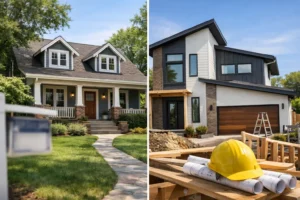
A builder’s model can make a new home feel like the obvious choice: clean finishes, fresh flooring, a modern kitchen, and no prior owner’s paint choices to undo. But resale versus new construction homes is not simply a choice between old and new. For Metro Detroit buyers, it is often a decision about location, timing, budget certainty, and how much work you are willing to manage before move-in.
A well-priced resale in Royal Oak or Troy may put you close to established amenities and mature trees. A new build in Novi, West Bloomfield, or a growing edge of Oakland County may offer the floor plan and energy efficiency your household wants. Both can be excellent purchases. The right answer depends on what you need the home to do for you over the next several years, not just what photographs best on the day you tour it.
Resale Versus New Construction Homes: Start With Your Priorities
The biggest mistake buyers make is comparing only the advertised price. A resale home and a new construction home can have similar starting prices while producing very different total costs, timelines, and negotiation opportunities.
Start with the non-negotiables. If a specific school district, walkable downtown, short commute, larger lot, or established neighborhood matters most, a resale may offer more choices. In communities such as Birmingham, Bloomfield Hills, Ferndale, and older parts of Rochester Hills, available land is limited. New construction may exist, but it is often a tear-down and rebuild, which can come with a premium.
If your priority is a first-floor primary suite, open kitchen, new mechanical systems, and minimal immediate maintenance, new construction deserves serious consideration. It can be especially appealing to move-up buyers who are tired of budgeting for roofs, furnaces, windows, and dated layouts.
Neither route should be selected on emotion alone. A clear needs list protects your budget and keeps a beautiful model home or a perfectly staged resale from pulling you off course.
What You Are Really Paying For
A resale price is generally more straightforward. You can review recent comparable sales, assess the condition of the home, negotiate based on inspection findings, and see the lot, street, and neighborhood as they are today. There may still be repair costs after closing, but the scope is usually easier to identify before you commit.
New construction pricing can be less direct. The base price may not include the elevation, lot premium, upgraded cabinets, countertops, flooring, lighting, appliance package, landscaping, deck, or finished basement you expect. A model home often contains thousands of dollars in upgrades that are not included in the advertised starting price.
That does not mean new construction is overpriced. It means buyers need an itemized view of what is included and what is optional before comparing it to a resale. Ask for the full specification sheet, upgrade pricing, estimated property taxes, homeowner association fees, and all builder-required deposits. If incentives are offered for using a preferred lender or title company, compare the full loan terms and closing costs before deciding whether the incentive is truly valuable.
Property taxes deserve extra attention with a new build. Michigan taxes can change after a sale or construction is completed, and an early estimate may be based on land value or a partial assessment rather than the finished home. Budget based on a realistic post-construction tax estimate, not the lowest number shown in a listing or early worksheet.
Location and Lot Can Outlast Any Finish Package
Cabinet color is easy to change. A lot that backs to a busy road, a tight distance between neighboring homes, or a long daily commute is much harder to fix.
Resale neighborhoods often provide the features buyers cannot recreate: mature landscaping, established roads, nearby parks, sidewalks, and a proven sense of how the area lives day to day. You can visit at different times, observe traffic, and get a clearer picture of the surroundings before writing an offer.
New developments may offer newer infrastructure, community amenities, and a more consistent housing style. They can also be in earlier stages, where future phases, construction traffic, and nearby commercial development are still evolving. Before reserving a lot, understand what is planned behind, beside, and across from it. Review easements, drainage areas, retention ponds, utility boxes, and any future building phases that could affect privacy or views.
For buyers considering a luxury home, lot selection can be as important as the house itself. Premium lots are often released early, and builders may charge substantially more for cul-de-sac placement, water views, walkout potential, or added space between homes. Those premiums should make sense for your long-term plans and local resale demand.
Timeline: Certainty Has Value
A resale home typically has a defined closing path. Once inspections, financing, appraisal, title work, and any repair negotiations are handled, most buyers can plan around a contract date. That predictability matters if you need to sell an existing home, start a new job, or coordinate a school-year move.
New construction can provide certainty only when the home is already complete or close to completion. A quick-move-in home may offer a relatively reliable closing date. A home being built from the ground up can be affected by permits, weather, labor availability, material delays, municipal inspections, and change orders.
Builders commonly provide estimated completion dates rather than guaranteed ones. Read the purchase agreement carefully. Understand the builder’s ability to extend deadlines, substitute materials, and address delays. If you must be out of your current home by a certain date, have a backup plan rather than assuming construction will finish exactly on schedule.
Inspections Still Matter in a Brand-New Home
New does not mean flawless. A newly built home has new systems and materials, but it can also have rushed workmanship, incomplete items, grading concerns, missing insulation, or mechanical issues that are easier to correct before closing.
An independent inspection is a practical layer of protection, not an accusation against the builder. Depending on the build stage, buyers may benefit from a pre-drywall inspection and a final inspection before closing. A final walkthrough should be detailed and documented. Test appliances, fixtures, windows, doors, garage openers, heating and cooling, and every agreed-upon feature.
For a resale, inspections serve a different purpose. They help you understand the age and condition of major components and determine whether to request repairs, negotiate a credit, or adjust your plans. Older homes can have character and solid construction, but buyers should budget realistically for maintenance. A home inspection is not a warranty, and no inspection can predict every future repair. It is a decision tool.
Negotiation Looks Different With Builders
Resale negotiation is usually centered on price, closing date, inspection repairs, seller concessions, and included personal property. Market conditions determine how much leverage a buyer has, but the transaction is often flexible enough to address the specific issues uncovered during due diligence.
Builders may be less willing to reduce a published base price, especially in an active development where lower recorded sales can affect future appraisals. That does not mean there is no room to negotiate. Closing-cost assistance, design-center credits, upgraded features, appliances, rate buydowns, and lot premiums can sometimes create more value than a direct price reduction.
The key is knowing which incentives have real value and which simply bring the deal back to market level. A strong buyer advocate can help compare the package, review contract terms, and keep the conversation focused on your interests. Builder sales representatives are knowledgeable, but they represent the builder’s side of the transaction.
When Each Choice Makes Sense
A resale home is often the better fit when location is your top priority, you want to see exactly what you are buying, or you need a defined closing schedule. It can also offer more room to improve the home over time and build equity through thoughtful updates.
New construction is often the better fit when layout, efficiency, lower near-term maintenance, and personalization outweigh the appeal of a mature neighborhood. It may be the right move for buyers who can be flexible on timing and who are prepared to manage selections, allowances, and a detailed walkthrough process.
For investors, the decision usually comes down to the numbers and tenant demand. A newer property may reduce early maintenance and appeal to tenants seeking modern finishes, while a well-bought resale in an established rental location may offer a stronger acquisition basis. The purchase should be evaluated with realistic taxes, financing, vacancy assumptions, insurance, and repair reserves.
The right home is the one that holds up after the model-home excitement fades and the inspection report arrives. Whether you choose a resale or a new build, move forward with clear numbers, a careful contract review, and local guidance that protects your interests from the first showing through closing.