
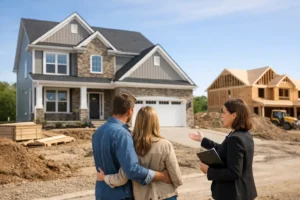
A brand-new home in Novi can mean the floor plan finally fits, the kitchen is designed around your life, and the maintenance list is short. It can also mean a builder contract, upgrade decisions, lot premiums, and a timeline that shifts more than expected. Buyers considering new construction homes Novi should expect more than a model-home tour. They need clear numbers, careful contract review, and representation focused on their interests from the first deposit through closing.
Novi remains a strong choice for buyers who want access to major employment centers, respected schools, shopping, parks, and commuter routes including I-96, I-696, and M-5. That demand makes the details matter. The right new-build purchase is not simply about selecting finishes. It is about choosing a location, builder, and contract structure that work for your household and long-term value.
Why Novi New Construction Requires a Closer Look
New construction comes in several forms. A buyer may purchase a completed spec home, select a home already under construction, build from a builder’s available plans, or buy a lot and make more extensive design selections. Each path has a different balance of speed, control, and cost certainty.
A completed home usually provides the clearest price and fastest move-in path, but the major finishes and layout are already chosen. A to-be-built home offers more personalization, yet it also introduces more decisions and more opportunities for the final price to rise. A semi-custom or custom build can be an excellent fit for buyers with specific needs, but it requires a realistic budget and patience with a longer process.
Novi buyers should also look beyond the house itself. Some communities are close to Twelve Oaks, major retail, dining, and highway access. Others offer a quieter setting, larger lots, or a more direct route toward Northville, Wixom, Farmington Hills, or the surrounding business corridors. School boundaries, HOA rules, traffic patterns, and future development near the community can affect daily life as much as the bedroom count.
Start With the All-In Price, Not the Base Price
The base price on a builder’s sign is a starting point, not necessarily the number that belongs in your budget. A model home may display flooring, cabinetry, lighting, landscaping, appliances, and structural options that are not included in the advertised price. That does not make the home a bad value. It means the buyer needs a full estimate before becoming emotionally attached to a particular plan.
Ask for a written breakdown of the expected purchase price, including the lot premium, structural options, design-center allowances, lender-related costs, property taxes, HOA fees, and any required deposits. If a feature is shown in the model but excluded from the base package, get its price in writing. Verbal assurances are not a substitute for contract language or a signed selection sheet.
Some upgrades add daily value but may not return dollar-for-dollar at resale. A larger kitchen island, improved storage, extra electrical outlets, and a practical mudroom often matter to future buyers. Highly personal finishes may be worth choosing if they improve your life, but they should be a conscious lifestyle decision rather than an assumption about resale.
Lot premiums deserve real scrutiny
The lot can be one of the most consequential choices in a new community. A premium lot may offer better privacy, a view, a larger yard, or a preferred location within the neighborhood. It may also sit near a main road, retention area, future construction zone, or shared open space with restrictions you did not anticipate.
Walk the lot at different times if possible. Look at sunlight, drainage, nearby traffic, utility boxes, easements, and the likely location of future homes. Ask for the site plan and understand what is planned around the property. A beautiful view today may change if adjacent phases have not yet been built.
Builder Contracts Are Written to Protect the Builder
This is where experienced buyer representation matters. The builder’s sales representative can be helpful and knowledgeable, but that person works for the builder. Their job is to sell the builder’s product and follow the builder’s process. They do not represent the buyer in negotiations or advise the buyer on whether a particular term is in the buyer’s best interest.
Builder contracts are often less flexible than a standard resale agreement. They may give the builder broad discretion over completion dates, material substitutions, plan changes, and remedies if the buyer defaults. Deposit schedules, financing deadlines, escalation language, and cancellation rights should be understood before signing, not explained after a problem appears.
A strong buyer advocate helps identify questions early, compare the builder’s offer against alternatives, and keep deadlines from being missed. There is no benefit in rushing through paperwork because a salesperson says demand is high. Good opportunities move quickly, but serious decisions still deserve disciplined review.
Incentives can be valuable, but they are not free money
Builders commonly offer credits toward closing costs, upgrades, or rate buydowns when a buyer uses a preferred lender or title provider. Sometimes that is genuinely the strongest financial option. Sometimes the incentive is offset by a higher rate, higher lender fees, or less competitive terms.
Compare the full loan estimate with at least one outside lender. Focus on the interest rate, annual percentage rate, lender fees, points, monthly payment, and cash needed at closing. If the builder incentive still produces the better overall result, use it confidently. If it does not, a credit should not pressure you into a loan that costs more over time.
Inspections Still Matter in a Brand-New Home
A new home is not an automatically perfect home. Construction involves many trades, tight schedules, inspections by local authorities, and occasional punch-list issues. Municipal inspections are necessary, but they do not replace an independent inspection performed for the buyer.
The best approach is often to schedule a professional inspection before the final walkthrough, assuming the builder’s process allows it. The inspector can identify concerns involving grading, roof details, HVAC operation, plumbing fixtures, electrical components, insulation access, and finish quality. Not every item will be major, but documenting issues before closing gives the buyer a clearer path to correction.
Keep a written record of punch-list items and follow the builder’s warranty process. Take photos during walkthroughs, retain all selection documents, and understand the difference between cosmetic corrections and warranty-covered defects. Many builders provide a limited first-year warranty process, but response times and coverage can vary.
Plan for Timing Without Building Your Life Around a Promise
Build timelines are estimates, not guarantees. Weather, permit delays, labor availability, inspections, material shortages, buyer changes, and utility coordination can alter a completion date. A builder with a solid reputation may still face circumstances outside its immediate control.
If you must sell an existing home, avoid treating an estimated completion date as certain. Consider whether you need a flexible temporary housing plan, a longer leaseback, or a sale strategy that gives you room if construction moves later. Buyers relocating for work should be especially careful about this point.
On the other hand, do not assume every build will be delayed for months. Many homes are completed close to their projected window, particularly when they are already well underway. The practical move is to build contingency into your plan rather than making an all-or-nothing bet on one date.
Questions to Ask Before You Commit
Before writing a deposit check, get direct answers about what is included, what can change, and what happens if a deadline moves. Ask whether the price is fixed, how change orders are handled, and whether materials can be substituted. Confirm the expected property-tax treatment, HOA dues, landscaping responsibilities, and whether fences, decks, sheds, or exterior changes require approval.
Also ask about the warranty process, final walkthrough timing, and whether an independent inspector is permitted before closing. If the community is still developing, ask how long construction is expected to continue and where future phases, roads, and amenities will be located.
These questions are not confrontational. They are part of buying carefully. A reputable builder should expect informed buyers to want clarity.
Choosing the Right New Construction Home in Novi
The best new construction homes in Novi are not always the largest models or the most upgraded homes in the sales office. The right choice is the one that fits your commute, household needs, financial comfort level, and plans for the next several years. For some buyers, that means a finished spec home with a predictable move-in date. For others, it means waiting for a lot that offers the privacy or layout they will appreciate every day.
Zamzam & Associates helps buyers evaluate new construction with the same care applied to any major real estate decision: clear information, responsive communication, and negotiation that protects the client rather than the transaction. Before you commit to a builder or a lot, make sure the numbers, contract terms, and timeline make sense for your real life. A new home should feel exciting at closing because the hard questions were handled early.